Monday, 5 September 2016

NIGHT VIEW IN KLIA 2

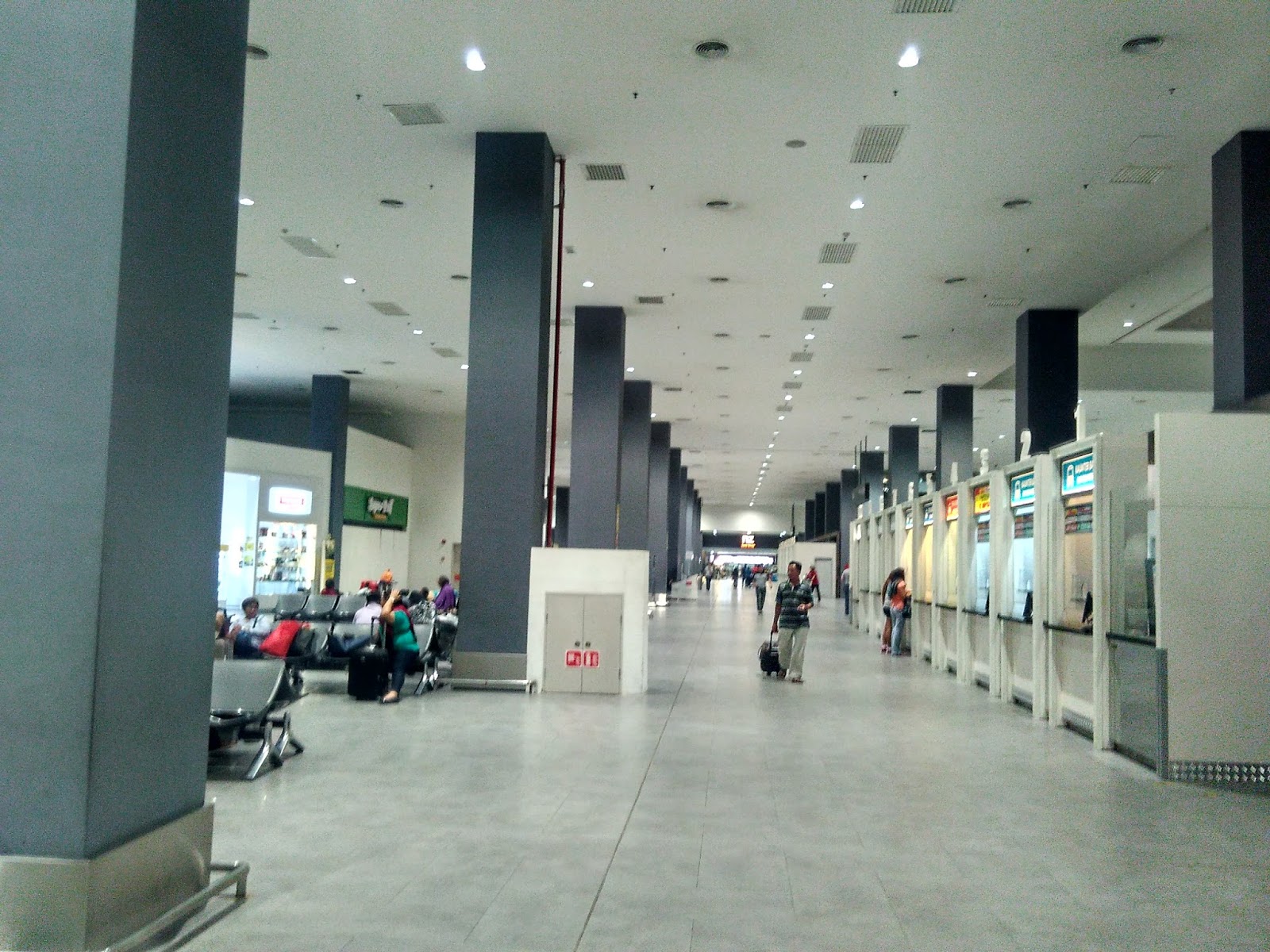
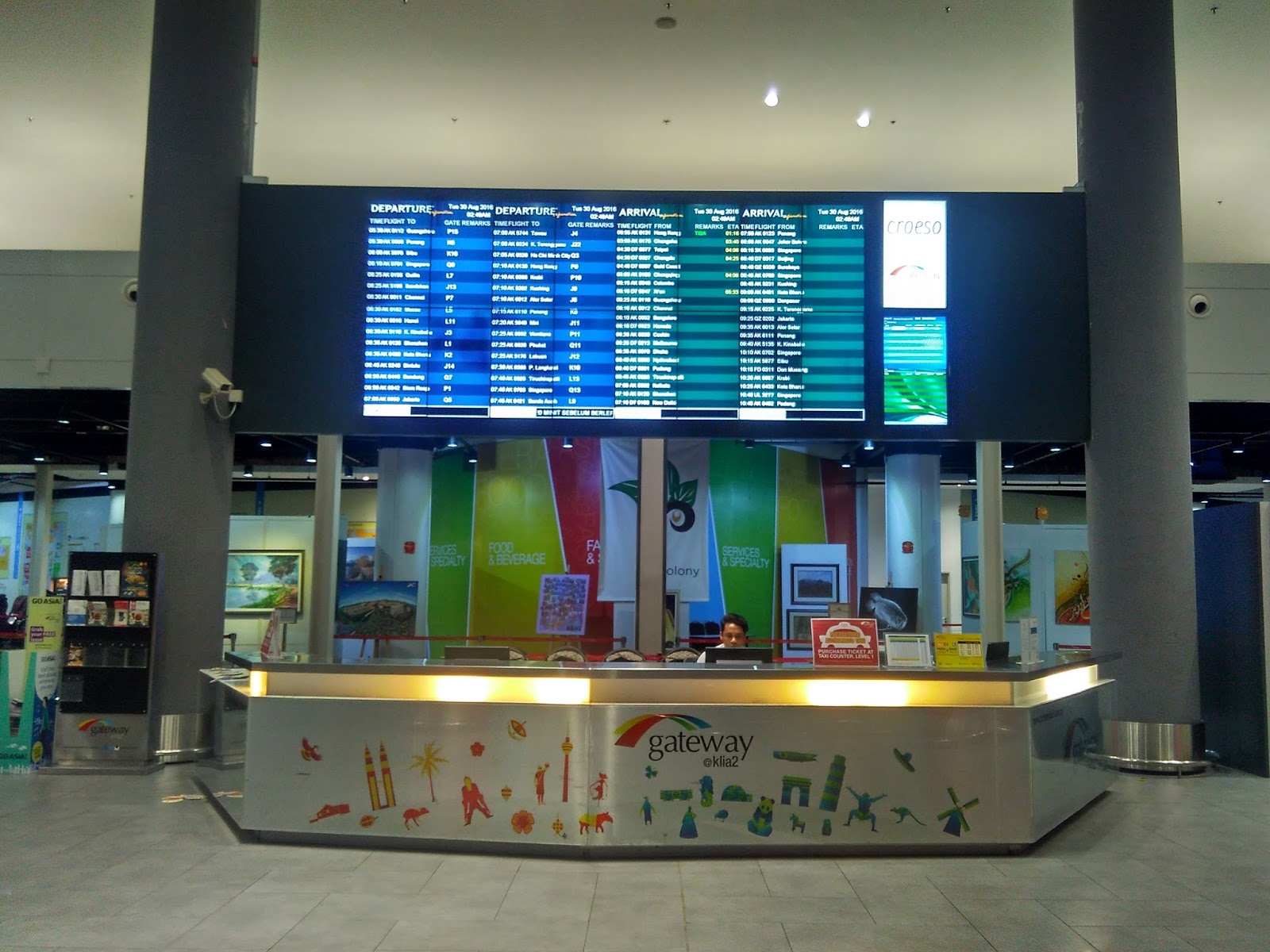
(Last monday, I went to the  Second Kuala Lumpur International Airport (KLIA 2). I planned to go back to my hometown, Alor Setar on next day morning's flight. I got chance to stay in airport one night. It can be said that because my polytehcnic hostel rule. We cannot get out after 9 p.m. in weekdays then 6 a.m. just come out from hostel everyday. This post I will give you guys a look in how is KLIA 2 look like... For who already been to KLIA 2, you guys should be familar with the environment. I wish you guys welcome to KLIA 2 one day to who never been to KLIA 2. I also welcome to our friends from overseas countries come to Malaysia in future time.)


The outside view of KLIA 2


Air Traffic Tower from KLIA 2's view


First Level of KLIA 2 : Transportation Hubs 


KLIA Express to KL Sentral 


The second level of KLIA 2


Starbucks 


The decoration For Malaysia's Independence Day


This is the fact of KLIA 2


Departure Hall


( For your information, the parking fee in KLIA 2 is quite expensive... One day about RM46, RM 20 onwards for fourth day and next day. I prefer you guys park your car in another place...)

I hope you guys who are come from overseas countries can come to visit my country, Malaysia. If you want a guy to be tour guide in Malaysia, can give me a email, I am very willing to be your tour guide with FOC. Welcome to Malaysia from me. 


Sunday, 4 September 2016

NEWS ARE UPDATED !!!

News for week 7 ( 28/8 - 3/9 ) is already updated !!!


A Conversation With Captain and First Officer of Airasia

(Last thursday, I come back from my hometown, Alor Setar during Independence Day holiday. I managed to have a short conversation with captain and first officer of Airasia in AK6019 flight after the plane landed at KLIA 2. I managed to ask some question from Captain Low and first officer, Eric for the pilot issue.)

Me : Sir, can I ask you something?

Eric : What question do you want to ask?

Me : I would like to ask about actually pilot can be a short-sightness person or he/she wear spectacle           during flight?

Eric : For commercial pilot, he/she can wear spectacles but for fighter pilot, surely he/she need to be             a good visual person.

Me : How can I apply to be pilot?

Eric : For Airasia, it always open the application for pilot. There are two ways to become pilot. First,           you can go to have pilot course in flying school. After you get your pilot license, then you                   apply for the pilot in commercial airlines. Second way is you can apply to Airasia company,                 borrow a loan for your course then sign working bond with the Airasia for 15 years.

Me : If bond with Airasia for 15 years, it is unworth...

Eric : Today, you need about RM 300,000 for your pilot course if you study in private flying school.

Low : Yes, it is true that you need RM 300,000 to complete pilot course.

Me : Thank you for your information. I hope we can meet again.


I share this conversation to whom are interested to apply for the pilot job...

Monday, 29 August 2016

So you want to learn to fly?

So you want to learn to fly?

Wow! 10 years since I passed my PPL checkride.  Instead of looking back at the last decade of flying, I thought I would use my wisdom (yeah right) to dispel a few myths about making that fateful first decision.

Frequently asked questions.

1)  Can I learn to fly?

Most people are capable of learning to fly to a safe PPL standard.  It is a matter of dedication and whether or not you can pass the medical requirements, fit and proper person test, and written exams.  The exams are no harder than a year 10 (10th Grade or 4th Form) test, and there are usually classes and/or online resources available to self study.  If you suffer from a condition that prevents you from driving a car, you probably cannot fly either.  When I say dedication, I mean it.  It is a never ending process as even thousand plus hour pilots will tell you they are still learning as they go.  There are a very small percentage of people to which flying comes naturally and  I am not one of them.  What this means is, it won't come to you over night, you need to practice it to get to the point where it comes naturally to you.  How long this takes depends as much on you as it does on the quality of your instructor.  What I will say is at the end of it all, not only will you have learned to fly but you'll have learned a lot about yourself on the way as well.

2)  Am I too old/young to learn?

There are no minimum or maximum age requirement to begin learning to fly.  You must be able to physically reach the controls and see over the instrument panel, but that is about it.  There are some limits placed on other aspects, namely in NZ you must be 16 or older to fly solo, 17 or older to hold a PPL and 18 or older to hold a CPL.  I know one young fella who had won several national flying competition titles by the time he went solo at age 16, and I know of an 80 year old gent who fulfilled a life long desire to learn to fly after his family finally convinced him he could do it. 

3)  Is it safe?

Taken in a literal sense, nothing is truly safe.  In a more reader friendly way, think of it like this:  Flying and flying training is made as safe as it can be and safety is an ongoing development that Flight Schools and Govt regulators take very seriously.  The long answer is while there is always serious risk in flying, steps are always taken to actively mitigate any inherent risk involved.  It's often said that its more dangerous driving out to the airport than actually flying the plane.  To compare the statistics, in March 2015 a family of four tragically lost their lives in a light plane crash.  Since then, no one has died flying light fixed wing airplanes.  From March 2015 up to today 248 people have died in automobile related accidents on NZ roads.  When you consider that in NZ pilots fly light aircraft for around 50,000 hours a year, there's a lot of fatality free flying going on!

4)  It's really expensive isn't it?

Yes it is.  But so is that house, car or 4kHD TV you want to buy.  My point is, if you really want to do this, a way will exist where you can afford to save up for it.  It might not be particularly pleasant and there may be some hard choices involved, but see my point about dedication.  It might surprise you how little it may cost compared with other pursuits (try costing up mountain biking, skiing or scuba diving as a comparison).  My PPL cost me NZ$14,000 over two years of training which took me just over 3 years to save up, and I spend approximately NZ$3500 a year (~NZ$375 per month) keeping current, competing and going on the odd joyride.

5)  Do I have to go on and become a commercial pilot once I get my PPL?

Strangely enough, a lot of non pilots ask me this question when they find out I fly recreationally.  They automatically assume that I am going to quit my job and change careers.  The answer is no you don't.  I've been flying privately for ten years and I have no plans to go any further down that path.  Besides, there are many other paths your flying can take even in the private pilots world, blogging being one of them. :-)

6) I'm a girl.  Can I fly?

You sure can, this is the 21st century!  Having said that, women have been flying for almost as long as men have and their history of flying makes for a fascinating read if you are interested.  There is nothing stopping you getting out there and having a go, it all starts with you.  I followed one aviatrix through her training from first flight to checkride.  She went through a lot of personal challenges on her journey, but she made it and passed her PPL flight test with flying colors (pun intended).  Go and read her blog.

Credit From: Making a Kiwi Fly


( I shared this post to who would like to fly the airplane who just like me...)

Tuesday, 23 August 2016

PART 145 AND PART 147 ORGANISATIONS LIST ARE UPDATED

I already uploaded a list part 145 and part 147 organisation in DCAM page and EASA page. Please take note that...

HOW TO DIFFERENCE MY POST WHICH I SHARE FROM OTHERS OR I ORIGINALLY WRITE MY OWN?

I can said that some of my post, are shared from others. Although like that, there are quite a lot of post are written by myself. First, if I shared others's post, I will mentioned early or you see that there are two same titles in one post. Otherwise, you will see only one post one title if the posts are written by me... I just want to mention it clearly right now so you all were not confused... Thanks You...

NEWS FOR WEEK 5 ALREADY UPDATED !!!

News are already updated for week 5 ( 14/8 - 20/8 ) ...


Jobs In Aviation

Line Service Personnel
Organizes all aircraft movements in-and-out of the Hangar, fuels and services the Aircraft.

Bird Scarer
Birds are a serious hazard to Aircraft. Bird Scarer’s perform a vital job at Airports.

Airport Manager
Without a Manager, the Airport probably would not exist. This person keeps the Airport viable.

Accountant
Federal Aviation Rules and Internal Revenue Tax Rules often clash. An Aviation Accountant is worth his weight in Gold!

Aircraft Dispatcher
Fuel, hotels, rental cars, passenger manifests, international clearances, handling, weather reports; the works. It is all in a days work for a Dispatcher.

Aircraft Inspector
The structural integrity and serviceability of an Aircraft must be closely inspected to ensure that the Aircraft remains safe to operate. Inspectors perform this vital task.

Aviation Insurance Agent
An Aircraft is an extremely expensive piece of equipment to own. Also the nature of flight can be inherently dangerous, and therefore financial protection must be put in place for any eventuality; this is where the Agent is very important.

Aviation Meteorologist
The sky is an ever changing environment that is potentially hazardous to an Aircraft and its occupants. The Meteorologist produces the predications and reports for dispatchers and pilots.

Aviation Doctor
Pilots must be in ‘tip-top’ condition to stay legal and safe in the cockpit. An Aviation Doctor performs regular physical check-ups on all pilots.

Aircraft Parts Manager
An Aircraft is a complex machine that has thousands of individual parts all placed together to create a whole Aircraft. The Parts Manager procures, sorts, categorizes, protects, stores and dispenses all of these parts, when needed.

Aviation Financier
Most individuals, and a lot of companies do not have liquidity in their financial holdings sufficient to pay for the purchase of an Aircraft. This is where an Aviation Financier is extremely important, because he arranges for the cash from a bank or individual investors to pay for the aircraft on the buyers behalf, and then gets the money paid back over a long period of time.

Cartographer
This person performs survey’s of the earth’s surface, and then creates charts for pilots to navigate from. Aviation Charts have to be up-dated constantly, so that aircraft don’t lose their way, or fly into an obstruction.

Director of Aircraft Maintenance
An Aircraft has to be regularly serviced and inspected, both on a calendar and hourly/cycle schedule. The Director of Maintenance is in charge of the Aircraft to ensure that all of these required tasks are performed on-time, and at the right interval.

Aircraft Engineer
This person can have many roles, or be very specialized. As Aircraft are designed, built, and maintained, it is the Engineers job to make sure that the original design concept is not compromised, and safety is foremost in the continued operation of an Aircraft.

Computer Analyst
The operation, care, and feeding of an Aircraft generates a massive amount of data. A computer analyst consolidates, tracks and analyzes all of this information, so the right decision can be made.

Airport Fire/Rescue
The most hazardous times during flight, occur at the Take-Off, and at the Landing. Airport Fire/Rescue personnel are there ready for when things go wrong.

Certified Flight and Ground Instructor
Pilots must first learn to fly, and then after they have progressed through their various Ratings, they must maintain their currency and proficiency. This would not be possible without the vital work performed by Flight and Ground Instructors. Often they teach pilots in a Simulator on the ground, instead of up in the air.

Flight Attendant
Often these aviation professionals are maligned by the general public. They are not on-board to merely serve refreshments; instead they are there to ensure the safe and orderly evacuation of the Aircraft during an emergency.

Avionics Technician
Anything electrical or computerized on an Aircraft, comes under the care and expertise of an Avionics Technician. Virtually all modern Aircraft are now fully digital and computerized.

Aviation Maintenance Technicians
These vital members of the aviation team, perform all of the servicing and repair operations that are necessary on an Aircraft. They work directly for the Director of Maintenance.

Technical Service Representative
All Aircraft, systems and components manufacturers employ Technical Service Representatives to ensure that the equipment that they sell, is understood, and operated properly and reliably. These individuals provide the necessary interface between the user of the product and the manufacturer.

The Passenger
Unless the Aircraft is a single-seater that is designed for utility or military operations; it is specifically designed to carry Passengers. Many companies around the World use Business Aircraft to transport their executives and operations people to meetings and appointments. A Business Aircraft is much, much, more efficient than any of the Airlines.

The Designer
If the initial design concept was not conceived of and then committed to paper, or onto a computer screen; no Aircraft would exist today. We owe a great debt of gratitude to all Designers.

The Salesperson
Designers and Engineers are not Sales people. Once a design is formulated, someone must sell the concept of its value and necessity for it to be purchased. The Salesperson is who makes it all happen, by making a product commercially viable in the eyes of it’s clients. Business and Aviation would not function if there were no Sales people involved.

FAA Inspector
The U.S. Government controls Civil Aviation through it’s agency, the: Federal Aviation Administration (FAA.) This agency employs Inspectors to make sure that operators and certificate holders are all complying with the law and are conducting safe air operations.

Air Traffic Controller
The FAA employs quick thinking, and highly alert people to direct air traffic safely through the skies of this nation. This is a highly stressful, but also a rewarding occupation.

Safety Officer/Auditor
Operating an Aircraft requires a complex organization that involves many different people to make it all work. Sometimes when people get busy, they might forget to follow all of the required steps to ensure that their task is done safely. The Safety Officer/Auditor is there to monitor for any possible breaches in safety, before they happen or cause an accident.

The Aviation Department Manager
All of the people on this page except for the FAA employees; the passengers and the Aircraft/Flight Department Owner, all report to the Aviation Department Manager, including the Pilot. ‘The Buck Stops Here’ with this person.

The Owner
This is the ultimate boss. He or she that holds the money, is the “head honcho” without whom, the Flight Department and all of it’s associated jobs would not exist.

The Pilot
Look at all of the people that he relies on, to be able to do his job.


Thursday, 18 August 2016

BEST AIRLINES TO WORK FOR

BEST AIRLINES TO WORK FOR

Best Airlines to Work for

Best Airlines to Work for

Even though the airline business is a extremely competitive environment for candidates, it pays to have your sights set high when it comes to classifying your preferred employer.  At AviationCV.com we collaborate with a host of global aviation companies and recruiters, so we have developed an understanding of how certain companies in the aviation sector work.  This has empowered us to create a shortlist of what we believe to be some of the top airlines to work for.
There are 5 best airlines to work for in our list.  On AviationCV.com website you can mostly find job offers of these companies.  In this article we will share a little bit of information about each with you, and no matter if you are looking out for a pilot job, a position in cabin crew or an airline engineer’s job, we hope you’ll find this information useful.
Here is our list of the best airlines to work for:

Emirates

Based in Dubai, The Emirates group is one of the best airlines in the world.  It is the largest airline in the Middle East, employing over 50,000 employees and operating over 3,300 flights per week from its hub at Dubai International Airport, to more than 148 cities in 78 countries across six continents, using 180 wide-bodied aircraft. This powerful market position makes Emirates Airline a highly attractive solution for travelers as well as job candidates.  Having the power to demand the best of the best, Emirates describes their working environment in Dubai as modern and offering one of the most desirable lifestyles in the world.  With a highly diverse cultural base, one of the big pulls for many people is the tax-free salary and benefits on offer in this part of the world.
Best Airlines to Work for

Turkish Airlines

Turkish Airlines is the national flag carrier airline of Turkey, headquartered in Istanbul. It operates scheduled services to 280 destinations in Europe, Asia, Africa and the Americas, making it the fourth-largest carrier in the world by number of destinations.Turkish Airlines is also the operator that flies to most countries. Turkish Airlines was established on 20 May 1933 and now it has about 20 000 employees and carries 54,7 million passengers a year. With a highly focused mission statement, you can be sure that if you join Turkish Airways that you will be on a fast track to maximising your development opportunities and opening doors that might not otherwise be accessible.
Best Airlines to Work for

Flydubai

A forward-thinking company Flydubai operates between a total of 95 destinations.  Based in the Dubai, Flydubai is headquartered in Dubai International Airport. The company was formed on 19 March 2008 as a venture by the Government of Dubai (the Government of Dubai also owns Emirates Airlines). Flydubai says that they are growing quickly and welcomes talented employees.
Best Airlines to Work for
The United Arab Emirates second biggest airline and flag carrier Etihad Airways has its Head office in Khalifa City in Abu Dhabi.  An airline that was created in 2003 operates more than 1,000 flights per week to over 120 passenger and cargo destinations in the Middle East, Africa, Europe, Asia, Australia and the Americas.  With a passenger arm, holiday businesses and a cargo company, Etihad has a great range of opportunities for candidates across every part of the aviation industry.

 Best Airlines to Work for

China Airlines

China Airlines is the flag carrier and largest airline of the Republic of China. It is headquartered in Taiwan and boasts a professional team of about 10,500 employees in nearly 100 different job categories (9,900 employees in Taiwan and 2,011 employees outside Taiwan), working all around the globe. China Airlines operates over 1,400 flights weekly to 118 airports in 115 cities across Asia, Europe, North America and Oceania. In this big family, every employee performs his/her jobs conscientiously. Motivated by the service goal of making China Airlines “The Most Reliable Airline”, they devote themselves to their work, making contributions in their respective work fields.
Best Airlines to Work for

LINE TRAINING FOR PILOT: EVERYTHING YOU NEED TO KNOW

LINE TRAINING FOR PILOT: EVERYTHING YOU NEED TO KNOW

Line training: everything pilot needs to know


Line training for pilot helps you increase the amount of hours flown, gain experience in the actual aircraft and get the better job. Line training programs are offered by airlines or recruiters. Despite the fact that there are many line training programs in the world the most popular are A320 line training and B737 line training. In this article you will find the general information on what is line training and why pilots need it.

Requirements

Requirements to get line training are quite similar everywhere. There is a list of main requirements for line training program:
— At least 100 hours as pilot-in-command of airplanes;
— Type rating on a current aircraft;
— Valid ME, IR (multi-engine, instrument rating);
— Valid CPL or ATPL;
— Valid Class 1 Medical Certificate;
— MCC certificate of completion;
— English level 4 according to ICAO requirements;
Keep in mind that you need to send your CV. So read article ‘How to write pilot resume’, follow tips and write a professional resume.

How it works?

First of all, you need to check if meet requirements and be available to start the program within 2-4 months. Afterwards you need to send required documents and, if pre-approved, wait for further information with all line training program details (payment, additional required documents, etc.). Airlines or recruiters usually prefer candidates with at least 100 hours in total (more is better) and high grade of final type rating exam (approximately between 95 – 100 %).

Payment

Line training price depends on the type of aircraft. For instance, line training A320 might cost around 40 000 – 50 000€. Line trainings on less popular aircraft types are normally cheaper. Usually cadets are asked to pay around 60% of payment before the program and rest of it after.
It is important to mention that when obtaining for line training, pilots are not being paid. However, most of airlines offer opportunity for pilots to sign a permanent contract as a first officer after finishing the line training. Keep in mind that accommodation and transportation is usually not provided during the line training.
Despite the opinion that line training destroys the airline pilot industry (“Pay to fly”), line training is in itself necessary. More or less, it’s the first step to be a pilot. For sure, there was a time when airline pilot training was sponsored by the airline hiring a pilot. However, the situation has changed and only few airlines still apply this policy.  So the main information about line training programs is relevant and needful. In order to start your pilot’s career, you need to invest.